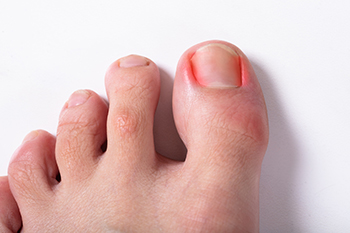
Understanding Athlete’s Foot and How to Treat It

Understanding Athlete’s Foot and How to Treat It

Athlete’s foot is a common fungal infection that affects the skin on the feet, often appearing between the toes. It can cause itching, redness, peeling, and cracking, which may lead to discomfort and spreading if untreated. The fungus thrives in warm, moist environments such as locker rooms and swimming pools. Risk factors include wearing tight shoes, having sweaty feet, or walking barefoot in public places. A podiatrist can provide an accurate diagnosis, and recommend preventive measures to stop recurrence. If you have signs of athlete’s foot, it is suggested that you consult a podiatrist who can provide effective treatment solutions, which often includes prescribed medication.

Athlete’s Foot

Athlete’s foot is often an uncomfortable condition to experience. Thankfully, podiatrists specialize in treating athlete’s foot and offer the best treatment options. If you have any questions about athlete’s foot, consult with One of our Practitioner from Frankel foot & Ankle. Our practitioner will assess your condition and provide you with quality treatment.

What Is Athlete’s Foot?

Tinea pedis, more commonly known as athlete’s foot, is a non-serious and common fungal infection of the foot. Athlete’s foot is contagious and can be contracted by touching someone who has it or infected surfaces. The most common places contaminated by it are public showers, locker rooms, and swimming pools. Once contracted, it grows on feet that are left inside moist, dark, and warm shoes and socks.

Prevention

The most effective ways to prevent athlete’s foot include:

  • Thoroughly washing and drying feet
  • Avoid going barefoot in locker rooms and public showers
  • Using shower shoes in public showers
  • Wearing socks that allow the feet to breathe
  • Changing socks and shoes frequently if you sweat a lot

Symptoms

Athlete’s foot initially occurs as a rash between the toes. However, if left undiagnosed, it can spread to the sides and bottom of the feet, toenails, and if touched by hand, the hands themselves. Symptoms include:

  • Redness
  • Burning
  • Itching
  • Scaly and peeling skin

Diagnosis and Treatment

Diagnosis is quick and easy. Skin samples will be taken and either viewed under a microscope or sent to a lab for testing. Sometimes, a podiatrist can diagnose it based on simply looking at it. Once confirmed, treatment options include oral and topical antifungal medications.

If you have any questions, please feel free to contact our offices located in Milford, PA Middletown, NY Warwick, NY . We offer the newest diagnostic and treatment technologies for all your foot care needs.

Read more about How to Deal with Athlete's Foot

Are You Suffering From Nerve Damage?

Are You Suffering From Nerve Damage?

Neuropathy is a condition that can lead to numbness or loss of sensation in the feet, but it can also cause pain. This condition is more likely to develop for those who are diabetic, obese, or with high blood pressure.

Everything You Need to Know About Gout

Everything You Need to Know About Gout

Gout, typically found in diabetic patients, is an unusually painful form of arthritis caused by elevated levels of uric acid in the bloodstream. The condition typically strikes the big joint on the big toe. It has also been known to strike the knees, elbows, fingers, ankles and wrists—generally anywhere that has a functioning, moving joint.

The high level of uric acid in a person’s bloodstream creates the condition known as hyperuricema—the main cause of gout. Genetic predisposition occurs in nine out of ten sufferers. The children of parents who suffer gout will have a two in ten chance of developing the condition as well. 

This form of arthritis, being particularly painful, is the leftover uric acid crystallizing in the blood stream. The crystallized uric acid then travels to the space between joints where they rub, causing friction when the patient moves. Symptoms include: pain, redness, swelling, and inflammation. Additional side effects may include fatigue and fever, although reports of these effects are very rare. Some patients have reported that pain may intensify when the temperature drops, such as when you sleep.

Most cases of gout are easily diagnosed by a podiatrist’s assessment of the various symptoms. Defined tests can also be performed. A blood test to detect elevated levels of uric acid is often used as well as an x-ray to diagnose visible and chronic gout.

Treatment for gout simply means eliminating symptoms. Non-steroid anti-inflammatory drugs or NSAIDs (Colchicine and other corticosteroid drugs, etc.) will quell the redness, the swelling, and the inflammation. However, managing your diet, lifestyle changes, and using preventative drugs are all helpful toward fully combating the most severe cases.

 Those that lead an inactive lifestyle are at a higher risk for gout. Any amount of exercise decreases the probability of repeat encounters with the condition. Reducing your consumption of red meat, sea food, and fructose-sweetened drinks also reduces the likelihood of chronic gout as well.

Ingesting Vitamin C, coffee, and particular dairy products can help with maintaining a healthy lifestyle. There are new drugs out on the market that inhibit the body’s production of uric acid-producing enzymes. However, reducing or eliminating your overall levels of uric acid is the best remedy to ensuring you lead a gout-free life.

Gout in Children and Adolescents

Gout in Children and Adolescents

Hyperuricemia, or gout, is a condition caused by high levels of uric acid in the blood, leading to crystal deposits in joints. Although rare in children and adolescents, it can occur due to genetic factors, kidney issues, obesity, or certain medications. Risk factors include a family history of gout, poor diet, and metabolic disorders. Symptoms include sudden joint pain, redness, swelling, and warmth, often affecting the big toe. These painful flare ups can limit mobility and daily activities. A podiatrist can provide an accurate diagnosis, pain management, lifestyle recommendations, and supportive footwear to prevent recurring attacks. If your child or teenager has symptoms of gout, it is strongly suggested that you consult a podiatrist who can offer effective treatment and relief tips for this painful condition. 

Gout is a foot condition that requires certain treatment and care. If you are seeking treatment, contact One of our Practitioner from Frankel foot & Ankle. Our practitioner will treat your foot and ankle needs.

What Is Gout?

Gout is a type of arthritis caused by a buildup of uric acid in the bloodstream. It often develops in the foot, especially the big toe area, although it can manifest in other parts of the body as well. Gout can make walking and standing very painful and is especially common in diabetics and the obese.

People typically get gout because of a poor diet. Genetic predisposition is also a factor. The children of parents who have had gout frequently have a chance of developing it themselves.

Gout can easily be identified by redness and inflammation of the big toe and the surrounding areas of the foot. Other symptoms include extreme fatigue, joint pain, and running high fevers. Sometimes corticosteroid drugs can be prescribed to treat gout, but the best way to combat this disease is to get more exercise and eat a better diet.

If you have any questions, please feel free to contact our offices located in Milford, PA Middletown, NY Warwick, NY . We offer the newest diagnostic and treatment technologies for all your foot care needs.

Read more about Everything You Need to Know About Gout

Foot Pain

Foot Pain

The feet, being the foundation of the body, carry all of the body’s weight and are therefore prone to experiencing pain and discomfort. If you are experiencing foot pain, it is important to determine where in the foot you are experiencing this pain to help discover the cause of it. While pain can be experienced virtually anywhere in the foot, the most common sites of foot pain are in the heel and ankle.   

Heel pain can be due to a multitude of conditions including plantar fasciitis, Achilles tendinitis, and heel spurs. Pain experienced in the ankle can be a sign of an ankle sprain, arthritis, gout, ankle instability, ankle fracture, or nerve compression. In more serious cases, pain in the foot can be a sign of improper alignment or an infection.

Foot pain can be accompanied by symptoms including redness, swelling, stiffness and warmth in the affected area. Whether the pain can be described as sharp or dull depends on the foot condition behind it. It is important to visit your local podiatrist if your foot pain and its accompanying symptoms persist and do not improve over time.

Depending on the location and condition of your foot pain, your podiatrist may prescribe certain treatments. These treatments can include but are not limited to prescription or over-the-counter drugs and medications, certain therapies, cortisone injections, or surgery.

If you are experiencing persistent foot pain, it is important to consult with your foot and ankle specialist to determine the cause and location. He or she will then prescribe the best treatment for you. While milder cases of foot pain may respond well to rest and at-home treatments, more serious cases may take some time to fully recover.

Major Causes of Ball of the Foot Pain

Major Causes of Ball of the Foot Pain

Pain in the ball of the foot, also called forefoot pain, can result from several conditions that affect the bones, joints, or soft tissues in this area. Metatarsalgia is one of the most frequent causes of pain in the ball of the foot. It develops when repetitive pressure on the metatarsal bones leads to inflammation and aching across the forefoot. Morton’s neuroma is another culprit, where a thickened nerve, usually between the  3rd and 4th toes, causes sharp or burning pain and sometimes numbness. A bunion deformity can shift pressure onto the ball of the foot, causing a change of gait that leads to pain and stiffness. A podiatrist can provide a thorough exam, identify the underlying cause, recommend footwear changes or orthotics, and determine whether surgery is needed. If you are experiencing pain in the ball of your foot, it is suggested that you make an appointment with a podiatrist for an exam, diagnosis, and treatment.

Foot Pain

Foot pain can be extremely painful and debilitating. If you have a foot pain, consult with One of our Practitioner from Frankel foot & Ankle. Our practitioner will assess your condition and provide you with quality foot and ankle treatment.

Causes

Foot pain is a very broad condition that could be caused by one or more ailments. The most common include:

  • Bunions
  • Hammertoes
  • Plantar Fasciitis
  • Bone Spurs
  • Corns
  • Tarsal Tunnel Syndrome
  • Ingrown Toenails
  • Arthritis (such as Gout, Rheumatoid, and Osteoarthritis)
  • Flat Feet
  • Injury (from stress fractures, broken toe, foot, ankle, Achilles tendon ruptures, and sprains)
  • And more

Diagnosis

To figure out the cause of foot pain, podiatrists utilize several different methods. This can range from simple visual inspections and sensation tests to X-rays and MRI scans. Prior medical history, family medical history, and any recent physical traumatic events will all be taken into consideration for a proper diagnosis.

Treatment

Treatment depends upon the cause of the foot pain. Whether it is resting, staying off the foot, or having surgery; podiatrists have a number of treatment options available for foot pain.

If you have any questions, please feel free to contact our offices located in Milford, PA Middletown, NY Warwick, NY . We offer the newest diagnostic and treatment technologies for all your foot care needs.

Read more about Foot Pain

Choosing the Right Running Shoe for Your Foot Type

Choosing the Right Running Shoe for Your Foot Type

Running may seem like a simple to do. However, running is actually a complex movement that puts stress on the ligaments, bones, and joints of the body.  Selecting the correct running shoe is important for increasing performance and avoiding risk of injury.  Running shoes should be selected based on your foot type.  Considerations such as trail versus road shoes are important. Your foot type dictates the degree of cushioning, stability and motion control you require.  The most accurate way to learn your foot type is to visit a local shop that specializes in running shoes.  Professionals can measure your arch type, stride and gait and help you with your shoe needs.

The design of running shoes is created around the idea of pronation.  Pronation is the natural rolling movement of your ankle from the outside to inside when your foot strikes the ground.  If you run properly you strike the ground on the outside of your heel and roll in the direction of your big toe before pushing off once more.  Pronation is beneficial because it assists the lower half of your body in absorbing shock and storing energy.  Those considered neutral runners pronate correctly and do not need running shoes that help correct their form.  Neutral runners can choose from a wide variety of shoes, including barefoot or minimal types.  However, those who have arch problems or who adopt an incorrect form while running may experience too much or too little pronation. They may require running shoes that offer additional support.

Those who overpronate experience an over-abundance of ankle rolling.  Even while standing, those who severely overpronate display ankles that are angled inward.  It is not uncommon for them to have flat feet or curved legs.  The tendency to overpronate may cause many injuries.  Areas that tend to become injured are the knees, ankles, and Achilles tendon.  If you find that you have a tendency to overpronate, you should look at shoes that provide extra stability and motion-control.  Motion-control shoes are straight and firm. Shoes of this type do not curve at the tip.  The restricted flexibility along the middle of the shoe prohibits the foot from rolling too far inward as your foot strikes the ground.

A less common problem is underpronation.  Underpronation, also called supination, is when the feet are unable to roll inward during landing.  Those who underpronate have feet that lack flexibility and high arches.  This prevents any kind of shock absorption, even though it does place less rotational stress on ankles and knees.  This added force can cause fractures, ligament tears, and muscle strains because the legs are trying to compensate for the impact.  Those who underpronate need shoes with more cushioning and flexibility.  If you have a tendency to underpronate, selecting stability or motion-control shoes may cause you more problems by continuing to prevent pronation.

Can I Wear the Same Shoes for Walking and Running?

Can I Wear the Same Shoes for Walking and Running?

Although the movements of walking and running are similar, the areas of the body affected and the force of impact vary. When running, more force is exerted from the knees, ankles, and hips, with far greater impact than walking. Also, the heel, mid-foot, and toes bear the heaviest weight load as they strike the ground during running, while walking tends to distribute weight more evenly across the foot. All of these factors dictate that different types of shoes and levels of support are necessary for running versus walking. A good running shoe will have more cushioning than is necessary in a walking shoe, with a heel that is flared and raised higher than the toe. Running shoes are not as flexible as walking shoes, with most flexibility occurring in the arch and middle of the foot, whereas a good walking shoe will have more flexibility overall and particularly in the front of the foot to enable a powerful push-off. The heels on walking shoes should not be flared or much higher than the toes at all. A podiatrist can offer more specific criteria on footwear for runners and walkers to achieve peak performance and reduce the risk of injury. 

If you are a runner, wearing the right running shoe is essential. For more information, contact One of our Practitioner from Frankel foot & Ankle. Our practitioner can provide the care you need to keep you pain-free and on your feet.

Choosing the Right Running Shoe for Your Foot Type

To increase performance and avoid the risk of injury, it is important to choose the right running shoe based on your foot type. The general design of running shoes revolves around pronation, which is how the ankle rolls from outside to inside when the foot strikes the ground.

  • Neutral runners are able to choose from a wide variety of shoes, including minimalist shoes or even going barefoot.
  • Runners who overpronate, or experience an over-abundance of ankle rolling, should choose shoes that provide extra motion control and stability.
  • Runners who underpronate, or supinate, have feet that have high arches and lack flexibility, preventing shock absorption. They require shoes with more flexibility and cushion.

If you have any questions, please feel free to contact our offices located in Milford, PA Middletown, NY Warwick, NY . We offer the newest diagnostic and treatment technologies for all your foot care needs.
Read more about Choosing the Right Running Shoe for Your Foot Type

Achilles Tendon Injuries

Achilles Tendon Injuries

The Achilles tendon is the largest tendon in the body; it is a tough band of fibrous tissue that stretches from the bones of the heel to the calf muscles. This tendon is what allows us to stand on our toes while running, walking, or jumping, it is common for this tendon to become injured. In severe cases, the Achilles tendon may become partially torn or completely ruptured. However, this tendon is susceptible to injury because of its limited blood supply and the high level of tension it endures.

The people who are more likely to suffer from Achilles tendon injuries are athletes who partake in activities that require them to speed up, slow down, or pivot. Consequently, athletes who engage in running, gymnastics, dance, football, baseball, basketball, or tennis are more likely to suffer from Achilles tendon injuries. Additionally, there are other factors that may make you more prone to this injury. People who wear high heels, have flat feet, tight leg muscles or tendons, or take medicines called glucocorticoids are more likely to have Achilles tendon injuries.

A common symptom of an Achilles tendon injury is pain above the heel that is felt when you stand on your toes. However, if the tendon is ruptured, the pain will be severe, and the area may become swollen and stiff. Other symptoms may be reduced strength in the lower ankle or leg area, and reduced range of motion in the ankle. When the Achilles tendon tears, there is usually a popping sound that occurs along with it. People who have acute tears or ruptures may find walking and standing to be difficult.

If you suspect you have injured your Achilles tendon, you should see your podiatrist to have a physical examination. Your podiatrist will likely conduct a series of tests to diagnose your injury including a “calf-squeeze” test. Calf squeeze tests are performed by first squeezing the calf muscle on the healthy leg. This will pull on the tendon and consequently cause the foot to move. Afterward, the same test will be performed on the injured leg. If the tendon is torn, the foot won’t move because the calf muscle won’t be connected to the foot.

When Running Leads to Achilles Tendon Pain

When Running Leads to Achilles Tendon Pain

Achilles tendonitis is a common injury in runners, often linked to repetitive stress on the thick tendon that connects the calf muscles to the heel. Early signs include stiffness in the morning, aching at the back of the ankle, or tenderness when beginning a run. With continued strain, the discomfort can worsen, making even walking or climbing stairs uncomfortable. Risk factors include sudden increases in mileage, uphill training, tight calf muscles, or worn shoes that fail to support the foot properly. Rest and gentle stretching may ease mild cases, while wearing supportive footwear and orthotics can help prevent recurrence. Severe or long-lasting pain may require more advanced treatment, including targeted exercise. If you are a runner struggling with persistent Achilles tendon pain, it is suggested that you consult a podiatrist for a proper evaluation and care plan.

Achilles tendon injuries need immediate attention to avoid future complications. If you have any concerns, contact One of our Practitioner of Frankel foot & Ankle. Our practitioner can provide the care you need to keep you pain-free and on your feet.

What Is the Achilles Tendon?

The Achilles tendon is a tendon that connects the lower leg muscles and calf to the heel of the foot. It is the strongest tendon in the human body and is essential for making movement possible. Because this tendon is such an integral part of the body, any injuries to it can create immense difficulties and should immediately be presented to a doctor.

What Are the Symptoms of an Achilles Tendon Injury?

There are various types of injuries that can affect the Achilles tendon. The two most common injuries are Achilles tendinitis and ruptures of the tendon.

Achilles Tendinitis Symptoms

  • Inflammation
  • Dull to severe pain
  • Increased blood flow to the tendon
  • Thickening of the tendon

Rupture Symptoms

  • Extreme pain and swelling in the foot
  • Total immobility

Treatment and Prevention

Achilles tendon injuries are diagnosed by a thorough physical evaluation, which can include an MRI. Treatment involves rest, physical therapy, and in some cases, surgery. However, various preventative measures can be taken to avoid these injuries, such as:

  • Thorough stretching of the tendon before and after exercise
  • Strengthening exercises like calf raises, squats, leg curls, leg extensions, leg raises, lunges, and leg presses

If you have any questions please feel free to contact our offices located in Milford, PA Middletown, NY Warwick, NY . We offer the newest diagnostic tools and technology to treat your foot and ankle needs.

Read more about Achilles Tendon Injuries
scroll to top