
Painful deformities, such as hammertoes, can be treated. Stop living with foot pain, and have beautiful feet again!
Painful deformities, such as hammertoes, can be treated. Stop living with foot pain, and have beautiful feet again!
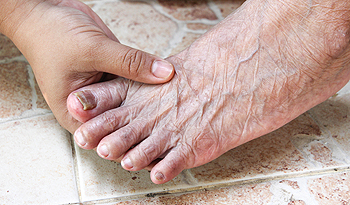
As people grow older, the feet naturally undergo changes that may increase the risk of discomfort and foot-related conditions. The supportive tissues of the feet may gradually lose elasticity and cushioning, which can lead to increased pressure on joints and bones. These changes may make older people more susceptible to foot pain and mobility concerns. Common foot problems associated with aging include arthritis, bunions, plantar fasciitis, and hammertoes. Symptoms may involve stiffness, swelling, reduced flexibility, and discomfort while walking or standing. A podiatrist can evaluate foot structure, diagnose underlying conditions, and recommend personalized treatment, such as supportive footwear guidance, custom orthotic devices, and targeted care. If you are elderly and have developed foot pain, it is suggested that you consult a podiatrist who can offer effective relief and prevention tips.
If you need your feet checked, contact One of our Practitioner of Frankel foot & Ankle. Our practitioner will attend to all of your foot and ankle needs and provide you with quality treatment.
Geriatrics and Podiatry
When people age, some common issues that may occur are bone density loss, dry skin, poor circulation, and rough brittle nails. These issues may also affect your foot health if the necessary steps are not taken to alleviate the problems.
It is important to take care of your feet because feet that are injured or diseased can affect your overall health. Having painful feet hinders your ability to do daily activities or may decrease your willingness to do the things that you need to do.
Visiting Your Geriatrician
As we age, health problems become more likely, so it is essential to visit your doctor for check-ups to ensure that you are doing the best you can to take care of your health. It is recommended to check your feet frequently for any possible cuts, bruises, swelling, corns or any other irregularities.
Taking Care of Elderly Feet
Cracked or dry feet can be treated by applying moisturizer often. It is also important not to wear old socks because the older the sock is, the higher the possibility there will be that there is bacteria there. Wear fresh socks and make sure they fit properly.
Proper foot health means that you can have a more active lifestyle and you will not be bogged down by pain. Foot health also leads to good circulation, which is paramount for overall health.
If you have any questions, please feel free to contact our offices located in Milford, PA Middletown, NY Warwick, NY . We offer the newest diagnostic and treatment technologies for all your foot care needs.
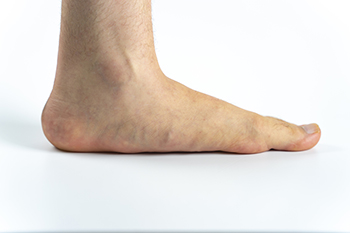
Flat feet occur when the arch on the inside of the foot is low or missing, causing most of the sole to touch the ground while standing or walking. The arch helps absorb shock and spread body weight during movement. When it flattens, the foot may roll inward and place strain on muscles and joints. Some people with flat feet have no symptoms, but others develop pain in the arch, heel, or ankle. Pain often worsens after long periods of standing or walking. Swelling along the inside of the ankle, tired feet, or shoes wearing out unevenly may also occur. Flat feet may develop when arches fail to form during childhood, or when supportive tissues weaken with age. Injury, arthritis, excess body weight, or inherited conditions can also affect foot structure. If you have flat feet, it is suggested that you make an appointment with a podiatrist for an exam, diagnosis, and treatment.
Flatfoot is a condition many people suffer from. If you have flat feet, contact One of our Practitioner from Frankel foot & Ankle. Our practitioner will treat your foot and ankle needs.
What Are Flat Feet?
Flatfoot is a condition in which the arch of the foot is depressed and the sole of the foot is almost completely in contact with the ground. About 20-30% of the population generally has flat feet because their arches never formed during growth.
Conditions & Problems:
Having flat feet makes it difficult to run or walk because of the stress placed on the ankles.
Alignment – The general alignment of your legs can be disrupted, because the ankles move inward which can cause major discomfort.
Knees – If you have complications with your knees, flat feet can be a contributor to arthritis in that area.
Symptoms
Treatment
If you are experiencing pain and stress on the foot you may weaken the posterior tibial tendon, which runs around the inside of the ankle.
If you have any questions, please feel free to contact our offices located in Milford, PA Middletown, NY Warwick, NY . We offer the newest diagnostic and treatment technologies for all your foot care needs.
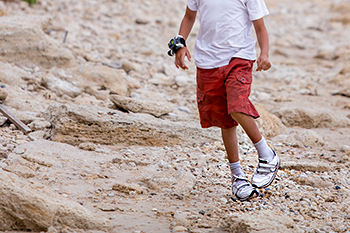
Clubfoot is a congenital condition in which a newborn foot appears twisted inward and downward due to abnormal development of muscles, tendons and ligaments. The exact cause is not always known, but genetics play a significant role and the condition may run in families. Environmental factors during pregnancy may also contribute. Diagnosis is often made at birth through a physical examination and sometimes confirmed with a prenatal ultrasound. Symptoms include a visibly rotated foot, limited range of motion, and stiffness, although the condition is not typically painful in infancy. A podiatrist provides early evaluation, guidance, and ongoing care through stretching, casting, bracing, and monitoring progress. Early treatment improves long-term mobility and function. If your child has been born with clubfoot, it is strongly suggested that you include a podiatrist on your health care team to ensure the best outcome for your child’s development.
Congenital foot problems require immediate attention to avoid future complications. If you have any concerns, contact One of our Practitioner of Frankel foot & Ankle. Our practitioner can provide the care you need to keep you pain-free and on your feet.
Congenital foot problems are deformities affecting the feet, toes, and/or ankles that children are born with. Some of these conditions have a genetic cause while others just happen. Some specific foot ailments that children may be born with include clubfeet, polydactyly/macrodactyly, and cleft foot. There are several other foot anomalies that can occur congenitally. What all of these conditions have in common is that a child may experience difficulty walking or performing everyday activities, as well as trouble finding footwear that fits their foot deformity. Some of these conditions are more serious than others. Consulting with a podiatrist as early as possible will help in properly diagnosing a child’s foot condition while getting the necessary treatment underway.
What are Causes of Congenital Foot Problem?
A congenital foot problem is one that happens to a child at birth. These conditions can be caused by a genetic predisposition, developmental or positional abnormalities during gestation, or with no known cause.
What are Symptoms of Congenital Foot Problems?
Symptoms vary by the congenital condition. Symptoms may consist of the following:
Treatment and Prevention
While there is nothing one can do to prevent congenital foot problems, raising awareness and receiving neonatal screenings are important. Early detection by taking your child to a podiatrist leads to the best outcome possible.
If you have any questions, please feel free to contact our offices located in Milford, PA Middletown, NY Warwick, NY . We offer the newest diagnostic and treatment technologies for all your foot care needs.
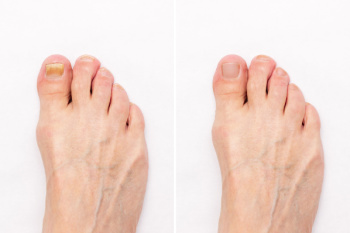
Toenail fungus, medically known as onychomycosis, is a common infection that develops when fungi enter the nail through small cracks in the nail or surrounding skin. Warm moist environments such as locker rooms and tight shoes create ideal conditions for fungal growth. The infection may begin with discoloration, thickening, or a brittle texture and can gradually worsen, if untreated. Diagnosis is confirmed through clinical evaluation and laboratory testing of nail samples to identify the specific organism. Risk factors include diabetes, poor circulation, weakened immunity, aging, and frequent exposure to damp areas. A podiatrist can provide an accurate diagnosis and offer effective treatment options to restore nail health. If you have signs of toenail fungus, it is suggested that you consult a podiatrist who can effectively treat this condition, which may include prescribed medication.
If left untreated, toenail fungus may spread to other toenails, skin, or even fingernails. If you suspect you have toenail fungus it is important to seek treatment right away. For more information about treatment, contact One of our Practitioner of Frankel foot & Ankle. Our practitioner can provide the care you need to keep you pain-free and on your feet.
Symptoms
Treatment
If self-care strategies and over-the-counter medications does not help your fungus, your podiatrist may give you a prescription drug instead. Even if you find relief from your toenail fungus symptoms, you may experience a repeat infection in the future.
Prevention
In order to prevent getting toenail fungus in the future, you should always make sure to wash your feet with soap and water. After washing, it is important to dry your feet thoroughly especially in between the toes. When trimming your toenails, be sure to trim straight across instead of in a rounded shape. It is crucial not to cover up discolored nails with nail polish because that will prevent your nail from being able to “breathe”.
In some cases, surgical procedure may be needed to remove the toenail fungus. Consult with your podiatrist about the best treatment options for your case of toenail fungus.
If you have any questions please contact our offices located in Milford, PA Middletown, NY Warwick, NY . We offer the newest diagnostic and treatment technologies for all your foot and ankle needs.

Gout is a form of inflammatory arthritis that often affects the joints of the feet and progresses through distinct stages. Asymptomatic hyperuricemia occurs when uric acid levels rise, but no pain or swelling is present. Acute gout is marked by sudden flare episodes with intense joint pain, redness, warmth, and swelling, commonly in the big toe. Intercritical or interval gout refers to the symptom-free periods between flares, even though uric acid crystals remain in the joint. Additionally, chronic tophaceous gout develops after years of repeated attacks and involves ongoing pain, joint stiffness, and firm crystal deposits that can damage bone and soft tissue. Early stages may seem manageable, but progression can lead to lasting joint problems. Identifying the stage helps guide appropriate care and long-term management. If foot joint pain or repeated flares occur, it is suggested that you see a podiatrist for appropriate care.
Gout is a painful condition that can be treated. If you are seeking treatment, contact One of our Practitioner from Frankel foot & Ankle. Our practitioner will treat your foot and ankle needs.
What Is Gout?
Gout is a form of arthritis that is characterized by sudden, severe attacks of pain, redness, and tenderness in the joints. The condition usually affects the joint at the base of the big toe. A gout attack can occur at any random time, such as the middle of the night while you are asleep.
Symptoms
Risk Factors
Prior to visiting your podiatrist to receive treatment for gout, there are a few things you should do beforehand. If you have gout you should write down your symptoms--including when they started and how often you experience them, important medical information you may have, and any questions you may have. Writing down these three things will help your podiatrist in assessing your specific situation so that he or she may provide the best route of treatment for you.
If you have any questions, please feel free to contact our offices located in Milford, PA Middletown, NY Warwick, NY . We offer the newest diagnostic and treatment technologies for all your foot care needs.

If you're experiencing ankle pain, you may be suffering from an ankle injury. Sprains, fractures, Achilles tendonitis, and Achilles tendon ruptures are just some examples of potential ankle injuries. Don't wait for care for an ankle injury, as it may worsen over time. We can help!

Breaking a toe can occur when it strikes a hard object or when something heavy lands on the foot. Symptoms include pain, swelling, bruising, and difficulty bearing weight, and the toe may look angled. A podiatrist determines whether the injury is a fracture or a sprain through examination and imaging, such as X-rays. Treatment of a broken toe focuses on stabilizing the bone so it heals in proper alignment. This may involve medical splinting to a neighboring toe, protective footwear, or a walking cast to limit motion and reduce joint stress. More severe fractures with displaced fragments or joint involvement may require surgical repair using small pins or screws. Proper care helps prevent long-term complications like stiffness, arthritis, or chronic walking pain. A podiatrist also monitors healing and guides the return to activity. If you have pain from a broken toe, it is suggested that you make an appointment with a podiatrist for an exam, diagnosis, and treatment.
A broken toe can be very painful and lead to complications if not properly fixed. If you have any concerns about your feet, contact One of our Practitioner from Frankel foot & Ankle. Our practitioner will treat your foot and ankle needs.
What to Know About a Broken Toe
Although most people try to avoid foot trauma such as banging, stubbing, or dropping heavy objects on their feet, the unfortunate fact is that it is a common occurrence. Given the fact that toes are positioned in front of the feet, they typically sustain the brunt of such trauma. When trauma occurs to a toe, the result can be a painful break (fracture).
Symptoms of a Broken Toe
Generally, it is best to stay off of the injured toe with the affected foot elevated.
Severe toe fractures may be treated with a splint, cast, and in some cases, minor surgery. Due to its position and the pressure it endures with daily activity, future complications can occur if the big toe is not properly treated.
If you have any questions, please feel free to contact our offices located in Milford, PA Middletown, NY Warwick, NY . We offer the newest diagnostic and treatment technologies for all your foot care needs.

Sever’s disease is a common growth-related heel condition that affects active children and adolescents during periods of rapid development. It occurs when repetitive stress and tension irritate the growth plate at the back of the heel where the Achilles tendon attaches. Causes often include running, jumping, tight calf muscles and overuse during sports activities. Risk factors may include high activity levels, wearing improper footwear, flat feet, or rapid growth spurts. A podiatrist can help by providing an accurate diagnosis recommending activity modification, custom orthotics, stretching, guidance, and supportive footwear to reduce strain on the heel. Early care can ease pain, improve mobility, and prevent ongoing discomfort. If your active child has heel pain, it is suggested that you consult a podiatrist who can offer effective relief and management tips.
Sever's disease often occurs in children and teens. If your child is experiencing foot or ankle pain, see One of our Practitioner from Frankel foot & Ankle. Our practitioner can treat your child’s foot and ankle needs.
Sever’s Disease
Sever’s disease is also known as calcaneal apophysitis, which is a medical condition that causes heel pain I none or both feet. The disease is known to affect children between the ages of 8 and 14.
Sever’s disease occurs when part of the child’s heel known as the growth plate (calcaneal epiphysis) is attached to the Achilles tendon. This area can suffer injury when the muscles and tendons of the growing foot do not keep pace with bone growth. Therefore, the constant pain which one experiences at the back of the heel will make the child unable to put any weight on the heel. The child is then forced to walk on their toes.
Symptoms
Acute pain – Pain associated with Sever’s disease is usually felt in the heel when the child engages in physical activity such as walking, jumping and or running.
Highly active – Children who are very active are among the most susceptible in experiencing Sever’s disease, because of the stress and tension placed on their feet.
If you have any questions, please feel free to contact our offices located in Milford, PA Middletown, NY Warwick, NY . We offer the newest diagnostic and treatment technologies for all your foot care needs.

Foot pain while skiing is common and often linked to the fit and function of your ski boots. Boots that are too big allow the foot to move excessively, which can lead to friction and painful blisters. When boots are too small, they compress the foot and limit circulation, creating pressure points and discomfort that can quickly ruin your time on the slopes. Hard turns, cold temperatures, and improper foot alignment can also add stress to the arches, heels, and toes. A podiatrist can assess your foot structure, identify pressure areas, and recommend custom orthotics or proper boot fitting strategies to enhance comfort and control. If foot pain is holding you back from enjoying skiing, it is suggested that you schedule a visit with a podiatrist for expert guidance and relief.
Foot Pain
Foot pain can be extremely painful and debilitating. If you have a foot pain, consult with One of our Practitioner from Frankel foot & Ankle. Our practitioner will assess your condition and provide you with quality foot and ankle treatment.
Causes
Foot pain is a very broad condition that could be caused by one or more ailments. The most common include:
Diagnosis
To figure out the cause of foot pain, podiatrists utilize several different methods. This can range from simple visual inspections and sensation tests to X-rays and MRI scans. Prior medical history, family medical history, and any recent physical traumatic events will all be taken into consideration for a proper diagnosis.
Treatment
Treatment depends upon the cause of the foot pain. Whether it is resting, staying off the foot, or having surgery; podiatrists have a number of treatment options available for foot pain.
If you have any questions, please feel free to contact our offices located in Milford, PA Middletown, NY Warwick, NY . We offer the newest diagnostic and treatment technologies for all your foot care needs.
© 2019 - 2026 The Frankel Foot & Ankle Center | Sitemap | Nondiscrimination | Designed by Podiatry Content Connection
