
Managing a Foot Stress Fracture

Foot stress fractures occur when the bones of the foot are subjected to repeated force without enough time to repair and recover. These hairline cracks often develop in the metatarsals, heel bone, navicular, or sesamoid bones near the toes, and they typically worsen with continued activity. People often experience gradually increasing pain, especially during sports or repetitive movement, and tenderness when pressure is applied. Because swelling is not always obvious, diagnosis of stress fractures often requires imaging such as X-rays or MRI scans. Certain foot fractures are considered to be a higher risk and can take longer to heal, sometimes requiring surgery to restore stability and function. Others are lower risk and may improve with guided changes in activity and temporary offloading. A podiatrist can evaluate the location and severity of the stress fracture, recommend appropriate treatment, and provide long-term strategies to reduce the risk of recurrence. If you have foot pain from repetitive sports or other activities, it is suggested that you schedule an appointment with a podiatrist for an exam and appropriate treatment.

Activities where too much pressure is put on the feet can cause stress fractures. To learn more, contact One of our Practitioner from Frankel foot & Ankle. Our practitioner can provide the care you need to keep your pain free and on your feet.

Dealing with Stress Fractures of the Foot and Ankle

Stress fractures occur in the foot and ankle when muscles in these areas weaken from too much or too little use.  The feet and ankles then lose support when walking or running from the impact of the ground. Since there is no protection, the bones receive the full impact of each step. Stress on the feet can cause cracks to form in the bones, thus creating stress fractures.

What Are Stress Fractures?

Stress fractures occur frequently in individuals whose daily activities cause great impact on the feet and ankles. Stress factors are most common among:

  • Runners                                
  • People affected with Osteoporosis
  • Tennis or basketball players
  • Gymnasts
  • High impact workouts

Symptoms

Pain from the fractures occur in the area of the fractures and can be constant or intermittent. It will often cause sharp or dull pain with swelling and tenderness. Engaging in any kind of activity which involves high impact will aggravate pain.

If you have any questions please contact our offices located in Milford, PA Middletown, NY Warwick, NY . We offer the newest diagnostic and treatment technologies for all your foot and ankle needs.

Read more about Dealing with Stress Fractures of the Foot and Ankle

Common Types of Athlete’s Foot

Athlete’s foot is a fungal infection that affects the skin on the feet, and usually occurs in three varieties called interdigital, moccasin, and vesicular. Interdigital athlete’s foot typically appears between the toes, causing itching, redness, peeling, and sometimes cracking or bleeding skin. Moccasin athlete’s foot affects the soles and sides of the feet, leading to dry, scaly, and thickened skin. Vesicular athlete’s foot is characterized by small, itchy blisters that may appear on the soles or insteps. Causes include walking barefoot in moist, communal areas, wearing damp socks, and poor foot hygiene. The infection can feel itchy, burning, or uncomfortable, and the affected skin may appear red, flaky, or cracked. A podiatrist can diagnose athlete’s foot through a physical examination and skin scrapings, if needed. Treatment may include antifungal creams, oral medications, and advice on prevention. To address symptoms effectively, it is suggested that you schedule an appointment with a podiatrist who can effectively treat athlete's foot.

Athlete’s foot is an inconvenient condition that can be easily reduced with the proper treatment. If you have any concerns about your feet and ankles, contact One of our Practitioner from Frankel foot & Ankle.  Our practitioner will treat your foot and ankle needs.

Athlete’s Foot: The Sole Story

Athlete's foot, also known as tinea pedis, can be an extremely contagious foot infection. It is commonly contracted in public changing areas and bathrooms, dormitory style living quarters, around locker rooms and public swimming pools, or anywhere your feet often come into contact with other people.

Solutions to Combat Athlete’s Foot

  • Hydrate your feet by using lotion
  • Exfoliate
  • Buff off nails
  • Use of anti-fungal products
  • Examine your feet and visit your doctor if any suspicious blisters or cuts develop

Athlete’s foot can cause many irritating symptoms such as dry and flaking skin, itching, and redness. Some more severe symptoms can include bleeding and cracked skin, intense itching and burning, and even pain when walking. In the worst cases, Athlete’s foot can cause blistering as well. Speak to your podiatrist for a better understanding of the different causes of Athlete’s foot, as well as help in determining which treatment options are best for you.

If you have any questions please feel free to contact our offices located in Milford, PA Middletown, NY Warwick, NY . We offer the newest diagnostic and treatment technologies for all your foot and ankle needs.

Read more about Athlete’s Foot

Resuming Running After a Broken Ankle

Getting back to running after breaking an ankle depends on bone healing, joint stability, and strength in the foot and ankle. After an ankle fracture, stiffness, swelling, and weakness often occur due to immobilization in a cast or boot. Before running again, the ankle must handle body weight without pain or instability. A podiatrist can evaluate the ankle’s condition through imaging and physical testing to confirm proper alignment and strength. They can also prescribe custom orthotics or insoles to improve foot support and help distribute pressure evenly during impact. Attempting to run too soon can increase the risk of re-injury or chronic pain. Wearing stable running shoes and progressing slowly helps protect the ankle as mobility improves. In cases where surgery was needed, additional time and medical monitoring are essential before resuming running. If you are recovering from a broken ankle, it is suggested that you make an appointment with a podiatrist for a diagnosis and guidance on returning to strenuous activities.

Broken ankles need immediate treatment. If you are seeking treatment, contact One of our Practitioner from Frankel foot & Ankle. Our practitioner can provide the care you need to keep you pain-free and on your feet. 

Broken Ankles
A broken ankle is experienced when a person fractures their tibia or fibula in the lower leg and ankle area. Both of these bones are attached at the bottom of the leg and combine to form what we know to be our ankle.

When a physician is referring to a break of the ankle, he or she is usually referring to a break in the area where the tibia and fibula are joined to create our ankle joint. Ankles are more prone to fractures because the ankle is an area that suffers a lot of pressure and stress. There are some obvious signs when a person experiences a fractured ankle, and the following symptoms may be present.

Symptoms of a Fractured Ankle

  • Excessive pain when the area is touched or when any pressure is placed on the ankle
  • Swelling around the area
  • Bruising of the area
  • Area appears to be deformed

If you suspect an ankle fracture, it is recommended to seek treatment as soon as possible. The sooner you have your podiatrist diagnose the fracture, the quicker you’ll be on the way towards recovery.

If you have any questions, please feel free to contact our offices located in Milford, PA Middletown, NY Warwick, NY . We offer the newest diagnostic and treatment technologies for all your foot care needs.

Read more about All About Broken Ankles

How Over-Pronation Can Affect Foot Health

Over-pronation occurs when the foot rolls too far inward with each step, placing excess stress on the arch, ankle, and surrounding soft tissues. Instead of evenly distributing weight across the foot, the inward roll causes the inner edge of the foot and big toe to bear too much pressure. This can flatten the arch, limit shock absorption, and strain muscles, tendons, and ligaments in the feet and ankles. Over time, over-pronation may contribute to painful conditions such as plantar fasciitis, bunions, heel pain, ankle sprains, and posterior tibial tendon problems. Over-pronation is often linked to flat feet, but can also develop from weak or imbalanced muscles, loose ligaments, or excessive flexibility in the foot and ankle. A podiatrist can evaluate your gait and foot posture, prescribe custom orthotics, recommend supportive bracing, or discuss surgery for severe cases. If you are experiencing foot pain, especially after activity, it is suggested that you make an appointment with a podiatrist for an exam, diagnosis, and treatment.

If you have any concerns about your feet, contact One of our Practitioner from Frankel foot & Ankle. Our practitioner can provide the care you need to keep you pain-free and on your feet.

Biomechanics in Podiatry

Podiatric biomechanics is a particular sector of specialty podiatry with licensed practitioners who are trained to diagnose and treat conditions affecting the foot, ankle and lower leg. Biomechanics deals with the forces that act against the body, causing an interference with the biological structures. It focuses on the movement of the ankle, the foot and the forces that interact with them.

A History of Biomechanics

  • Biomechanics dates back to the BC era in Egypt where evidence of professional foot care has been recorded.
  • In 1974, biomechanics gained a higher profile from the studies of Merton Root, who claimed that by changing or controlling the forces between the ankle and the foot, corrections or conditions could be implemented to gain strength and coordination in the area.

Modern technological improvements are based on past theories and therapeutic processes that provide a better understanding of podiatric concepts for biomechanics. Computers can provide accurate information about the forces and patterns of the feet and lower legs.

Understanding biomechanics of the feet can help improve and eliminate pain, stopping further stress to the foot.

If you have any questions please feel free to contact our offices located in Milford, PA Middletown, NY Warwick, NY . We offer the newest diagnostic and treatment technologies for all your foot and ankle needs.

Read more about The Importance of Biomechanics in Podiatry

Keep Your Feet Healthy So You Can Stay Active

Have your feet inspected by a professional before starting a new sport or physical activity. Taking charge of your foot health will keep you in good physical condition and can help you avoid a potential injury, such as a fracture or sprained ankle.

Prevent injuries and see a foot specialist.

Can My Baby Develop an Ingrown Toenail?

A toenail that grows into the skin on the sides of the toe is known as an ingrown toenail. Research has shown that a baby's toenails are soft and pliable, and if it is accompanied by swelling and redness, it may be an ingrown toenail. Additional symptoms of this condition can include pain and difficulty keeping shoes on. Some of the reasons this ailment may occur can consist of trimming the toenails incorrectly, wearing shoes that are too tight, and it may run in families. Your child’s foot may feel better when it is soaked in warm water, and the swollen area is gently massaged. If your child has these symptoms, it is strongly suggested that you consult with a podiatrist who can guide you toward proper treatment techniques.

Ingrown toenails may initially present themselves as a minor discomfort, but they may progress into an infection in the skin without proper treatment. For more information about ingrown toenails, contact One of our Practitioner of Frankel foot & Ankle. Our practitioner can provide the care you need to keep you pain-free and on your feet.

Ingrown Toenails

Ingrown toenails are caused when the corner or side of a toenail grows into the soft flesh surrounding it. They often result in redness, swelling, pain, and in some cases, infection. This condition typically affects the big toe and may recur if it is not treated properly.

Causes

  • Improper toenail trimming
  • Genetics
  • Improper shoe fitting
  • Injury from pedicures or nail picking
  • Abnormal gait
  • Poor hygiene

You are more likely to develop an ingrown toenail if you are obese, have diabetes, arthritis, or have any fungal infection in your nails. Additionally, people who have foot or toe deformities are at a higher risk of developing an ingrown toenail.

Symptoms

Some symptoms of ingrown toenails are redness, swelling, and pain. In rare cases, there may be a yellowish drainage coming from the nail.

Treatment

Ignoring an ingrown toenail can have serious complications. Infections of the nail border can progress to a deeper soft-tissue infection, which can then turn into a bone infection. You should always speak with your podiatrist if you suspect you have an ingrown toenail, especially if you have diabetes or poor circulation.

If you have any questions, please feel free to contact our offices located in Milford, PA Middletown, NY Warwick, NY . We offer the newest diagnostic and treatment technologies for all your foot care needs.

Read more about Ingrown Toenails

Causes of Foot and Ankle Swelling

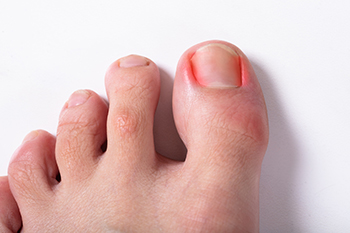
Foot and ankle swelling, also known as edema, can result from a variety of causes. Being overweight increases pressure on the veins and can lead to fluid buildup, while older adults are more prone to it due to reduced circulation. Blood clots in the legs can cause sudden swelling and require immediate attention, and infections in the leg or foot may also lead to localized swelling, redness, and pain. Other contributing factors include prolonged standing, injury, or certain medical conditions. A podiatrist can evaluate the underlying cause through a physical examination and diagnostic testing, provide treatment to reduce swelling, and recommend lifestyle or footwear adjustments to prevent recurrence. If your feet or ankles have become swollen, it is suggested that you schedule an appointment with a podiatrist who can offer effective relief and management solutions.

Swollen feet can be a sign of an underlying condition. If you have any concerns, contact One of our Practitioner of Frankel foot & Ankle. Our practitioner can provide the care you need to keep you pain-free and on your feet.

Swollen feet are a common ailment among pregnant women and people who stand or sit for extended periods. Aging may increase the possibility of swollen feet and patients who are obese often notice when their feet are swelling too. There may be medical reasons why swollen feet occur:

  • Phlebitis - A condition that causes the veins to become inflamed and can also cause leg pain.
  • Liver disease - This may lead to low blood levels of albumin which is a protein. This can cause fluid in the blood to pass into the tissues and several areas of the body can become swollen.
  • Heart failure - When the heart doesn’t pump properly the blood that is normally pumped back to the heart can pool in the veins of the legs causing swollen feet.
  • Kidney disease - One of the main functions of the kidneys is releasing excess fluid in the body. This type of condition can make it difficult for the kidneys to function properly, and as a result the feet may become swollen.
  • Deep-vein thrombosis (DVT)- This is a serious condition where blood clots form in the veins of the legs. They can block the return of blood from the legs to the heart which may cause the feet to swell. It is important to be treated by a podiatrist if this condition is present.

Swollen feet can also be caused by bone and tendon conditions, including fractures, arthritis, and tendinitis. Additionally, there may be skin and toenail conditions and an infection may cause the feet to swell. Patients who take medicine to treat high blood pressure may be prone to getting swollen feet. 

Many patients elevate their feet to help relieve the swelling and this is generally a temporary remedy. When a podiatrist is consulted the reason behind the swelling can be uncovered and subsequently treated.

If you have any questions please contact our offices located in Milford, PA Middletown, NY Warwick, NY . We offer the newest diagnostic and treatment technologies for all your foot and ankle needs.
Read more about Swelling of the Feet

Corns and Calluses: Similar Yet Different

Corns and calluses are very similar in that they both involve a thickening of skin on the feet and are caused by friction or pressure. What makes them different are their sizes and where they develop on the feet. Corns are smaller, rounder, and they usually show up on the soles of the foot as well as on the sides and tops of the toes. Calluses are larger, yellowish, and typically are found on the balls of the foot. Removing or greatly reducing the source of friction, as well as certain topical treatments may help to dissolve corns and calluses. In severe cases, or when the patient has diabetes or poor circulation, consultation with a podiatrist is suggested.

Corns can make walking very painful and should be treated immediately. If you have questions regarding your feet and ankles, contact One of our Practitioner of Frankel foot & Ankle. Our practitioner will treat your foot and ankle needs.

Corns: What Are They? And How Do You Get Rid of Them?
Corns are thickened areas on the skin that can become painful. They are caused by excessive pressure and friction on the skin. Corns press into the deeper layers of the skin and are usually round in shape.

Ways to Prevent Corns
There are many ways to get rid of painful corns such as:

  • Wearing properly fitting shoes that have been measured by a professional
  • Wearing shoes that are not sharply pointed or have high heels
  • Wearing only shoes that offer support

Treating Corns

Although most corns slowly disappear when the friction or pressure stops, this isn’t always the case. Consult with your podiatrist to determine the best treatment option for your case of corns.

If you have any questions, please feel free to contact our offices located in Milford, PA Middletown, NY Warwick, NY . We offer the newest diagnostic and treatment technologies for all your foot care needs.

Read more about Understanding Corns and Calluses

Recognizing Symptoms of Ankle Osteoarthritis

Ankle osteoarthritis develops when the protective cartilage in the ankle joint wears down over time, leading to pain and stiffness. Symptoms often begin gradually and worsen with activity. Many people notice aching or tenderness in the ankle that increases after walking or standing for long periods of time. Swelling may occur surrounding the joint, and the ankle can feel stiff, particularly in the morning or after rest. As the condition progresses, the range of motion may become limited, making it harder to move the ankle smoothly. Some individuals experience a grinding or catching sensation due to rough joint surfaces. In more advanced cases, deformity and instability may develop, which can interfere with daily activities. If you are experiencing ongoing ankle discomfort or stiffness, it is suggested that you schedule an appointment with a podiatrist to receive a proper diagnosis and tailored treatment plan.

Ankle pain can have many different causes and the pain may potentially be serious. If you have ankle pain, consult with One of our Practitioner from Frankel foot & Ankle. Our practitioner will assess your condition and provide you with quality foot and ankle treatment.

Ankle pain is any condition that causes pain in the ankle. Due to the fact that the ankle consists of tendons, muscles, bones, and ligaments, ankle pain can come from a number of different conditions.

Causes

The most common causes of ankle pain include:

  • Types of arthritis (rheumatoid, osteoarthritis, and gout)
  • Ankle sprains
  • Broken ankles
  • Achilles tendinitis
  • Achilles tendon rupture
  • Stress fractures
  • Tarsal tunnel syndrome
  • Plantar fasciitis

Symptoms

Symptoms of ankle injury vary based upon the condition. Pain may include general pain and discomfort, swelling, aching, redness, bruising, burning or stabbing sensations, and/or loss of sensation.

Diagnosis

Due to the wide variety of potential causes of ankle pain, podiatrists will utilize a number of different methods to properly diagnose ankle pain. This can include asking for personal and family medical histories and of any recent injuries. Further diagnosis may include sensation tests, a physical examination, and potentially x-rays or other imaging tests.

Treatment

Just as the range of causes varies widely, so do treatments. Some more common treatments are rest, ice packs, keeping pressure off the foot, orthotics and braces, medication for inflammation and pain, and surgery.

If you have any questions please feel free to contact our offices located in Milford, PA Middletown, NY Warwick, NY . We offer the newest diagnostic tools and technology to treat your foot and ankle needs.

Read more about Ankle Pain

Understanding Athlete’s Foot and How to Treat It

Athlete’s foot is a common fungal infection that affects the skin on the feet, often appearing between the toes. It can cause itching, redness, peeling, and cracking, which may lead to discomfort and spreading if untreated. The fungus thrives in warm, moist environments such as locker rooms and swimming pools. Risk factors include wearing tight shoes, having sweaty feet, or walking barefoot in public places. A podiatrist can provide an accurate diagnosis, and recommend preventive measures to stop recurrence. If you have signs of athlete’s foot, it is suggested that you consult a podiatrist who can provide effective treatment solutions, which often includes prescribed medication.

Athlete’s Foot

Athlete’s foot is often an uncomfortable condition to experience. Thankfully, podiatrists specialize in treating athlete’s foot and offer the best treatment options. If you have any questions about athlete’s foot, consult with One of our Practitioner from Frankel foot & Ankle. Our practitioner will assess your condition and provide you with quality treatment.

What Is Athlete’s Foot?

Tinea pedis, more commonly known as athlete’s foot, is a non-serious and common fungal infection of the foot. Athlete’s foot is contagious and can be contracted by touching someone who has it or infected surfaces. The most common places contaminated by it are public showers, locker rooms, and swimming pools. Once contracted, it grows on feet that are left inside moist, dark, and warm shoes and socks.

Prevention

The most effective ways to prevent athlete’s foot include:

  • Thoroughly washing and drying feet
  • Avoid going barefoot in locker rooms and public showers
  • Using shower shoes in public showers
  • Wearing socks that allow the feet to breathe
  • Changing socks and shoes frequently if you sweat a lot

Symptoms

Athlete’s foot initially occurs as a rash between the toes. However, if left undiagnosed, it can spread to the sides and bottom of the feet, toenails, and if touched by hand, the hands themselves. Symptoms include:

  • Redness
  • Burning
  • Itching
  • Scaly and peeling skin

Diagnosis and Treatment

Diagnosis is quick and easy. Skin samples will be taken and either viewed under a microscope or sent to a lab for testing. Sometimes, a podiatrist can diagnose it based on simply looking at it. Once confirmed, treatment options include oral and topical antifungal medications.

If you have any questions, please feel free to contact our offices located in Milford, PA Middletown, NY Warwick, NY . We offer the newest diagnostic and treatment technologies for all your foot care needs.

Read more about How to Deal with Athlete's Foot
scroll to top